ABOUT ACOUSTICS

The Science of Sound

Introduction to Room Acoustics

Acoustics is the multidisciplinary science that deals with the study of mechanical waves in gases, liquids, and solids, including topics such as vibration, sound, ultrasound, and infrasound.

When we talk about "room acoustics" or "architectural acoustics," we specifically focus on how sound behaves within an enclosed space. This involves understanding how sound waves are produced, how they travel, how they interact with surfaces, and ultimately, how they are perceived by listeners.

The ultimate goal of architectural acoustic engineering is to design environments where speech is perfectly intelligible, music sounds rich and clear, and distracting ambient noise is systematically minimized.
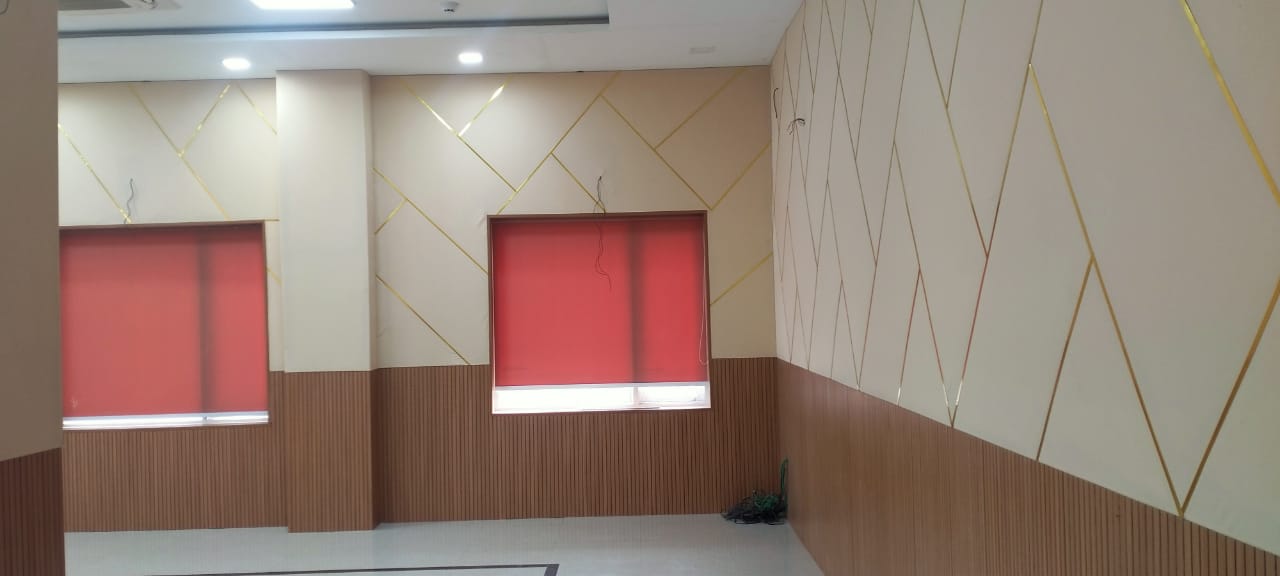
Acoustic Wave Comparisons: Live Room vs Treated Room Layout
Comparative Analysis: Untreated Live Room vs Treated Wave Distribution

Key Terms in Room Acoustics

Understanding the foundational principles that govern mechanical sound propagation within interior spaces.

1. Reverberation

Reverberation (or "reverb") is the persistence of sound in a space after the original source stops. This happens because sound waves bounce off all room surfaces—walls, ceilings, and floors—adding a natural lingering "tail" to what we hear.

Reverberation Time (RT60)

The metric defining the exact time required for the sound pressure level to decay by 60 decibels (dB).

  • Low RT60 (0.3s - 0.7s): "Dead" environment optimal for speech clarity, offices, and studios.
  • High RT60 (1.8s - 2.5s): "Live" environment adding warmth to orchestras or cathedrals.

2. Sound Absorption

The process where a material takes in sound energy rather than reflecting it. The incoming wave is transformed into minor thermal heat instead of bouncing back to cause an echo footprint.

Absorption Metrics

Measured by the Absorption Coefficient (α) ranging from 0.00 (perfect reflection) to 1.00 (perfect absorption).

Products are evaluated via their Noise Reduction Coefficient (NRC), averaging frequencies at 250, 500, 1000, and 2000 Hz.

3. Sound Diffusion

When a sound wave hits a flat surface, it reflects symmetrically at a specular angle (like a mirror). If a surface is large and untreated, this pathing causes sharp, distinct slap-back echoes.

The Role of Diffusers

Irregular, three-dimensional surfaces break up reflections and scatter sound waves evenly in multiple directions.

This maintains spatial energy and uniformity across high-end environments without leaving the room sounding completely "dead".

Achieving Spatial Harmony

By properly pairing high-NRC sound absorbers with mathematical diffusion configurations, advanced acoustic layout designs optimize noise control across commercial and industrial builds.